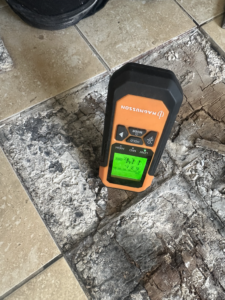
The owner of a residential rental property contacted Property-Fixx Ltd after concerns were raised about possible moisture damage within the upstairs bathroom.
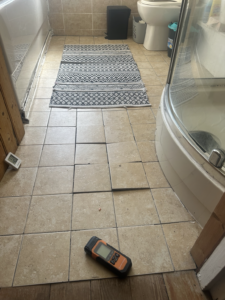
Although the bathroom appeared to be in good condition and there were no obvious signs of an active leak, there was concern that previous water ingress may have caused hidden damage beneath the tiled floor.
The objective of the investigation was to determine whether a leak was still present, identify the source of any moisture and assess the condition of the concealed floor structure before recommending the appropriate remedial works.
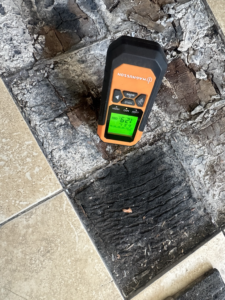
A systematic investigation was carried out to eliminate potential sources of water ingress before any intrusive work commenced.
The inspection included:
Rather than assuming the visible symptoms indicated the source of the problem, each potential cause was investigated and either confirmed or eliminated before further work was undertaken.
Initial inspections confirmed there were no active leaks from the basin, WC, waste pipework or visible plumbing connections.
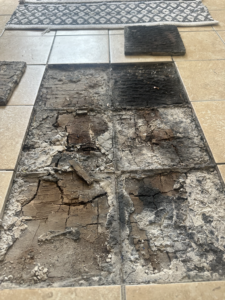
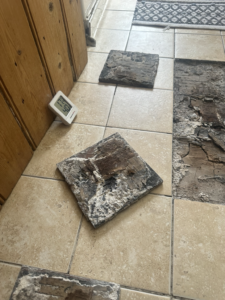
As no current plumbing defect could be identified, sections of the tiled floor were carefully removed to inspect the concealed floor construction.
Once exposed, extensive deterioration of the timber floor became immediately apparent. The timber beneath the tiled finish had suffered significant decay consistent with prolonged moisture exposure over an extended period.
The pattern of deterioration indicated that the damage had not resulted from a recent plumbing failure but from a historic leak associated with the shower enclosure. Although the original leak had ceased, the moisture had remained trapped beneath the impervious tiled floor, allowing the timber to continue deteriorating unnoticed.
The investigation demonstrated how significant structural damage can remain completely hidden beneath an otherwise well-presented bathroom.
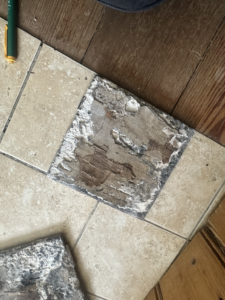
The investigation concluded that the deterioration had been caused by a historic shower leak, rather than an active defect within the existing plumbing system.
By systematically checking all sanitary fittings and plumbing connections before exposing the floor structure, unnecessary repairs were avoided and the true cause of the damage was identified.
This case highlights the importance of investigating concealed building elements where the visible condition of the bathroom does not reflect the condition of the underlying structure.
Following confirmation that there were no active plumbing leaks, the damaged floor was repaired.
The work included:
Replacing the damaged floor with marine plywood and a resilient floor covering provided a practical and durable solution while avoiding the risk of trapping future moisture beneath ceramic tiles.
The investigation successfully identified the cause of the concealed damage, allowing repairs to focus on the affected floor structure rather than unnecessary plumbing work.
By following a methodical investigation process and confirming that no active leaks remained, the owner gained confidence that the underlying defect had been properly understood and rectified.
The project demonstrates how hidden moisture damage can develop over many years without obvious visible signs and reinforces the importance of investigating the building fabric rather than relying solely on surface appearance.

Property Type: Residential rental property
Primary Issue: Hidden timber floor decay caused by a historic shower leak.
Investigation Included: Visual inspection, plumbing checks, inspection of sanitary fittings, assessment of accessible pipework and intrusive opening-up of the tiled floor.
Diagnosis: Long-term deterioration of the timber floor structure caused by a historic shower enclosure leak. No active leaks were found from the existing plumbing or sanitary fittings.
Outcome: The concealed damage was identified, and deteriorated flooring was replaced with 12 mm marine plywood and finished with a cushioned vinyl floor covering, providing a durable long-term repair
