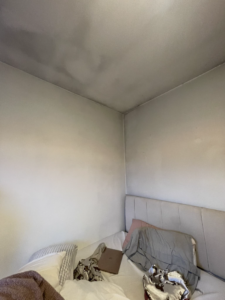
The homeowner contacted Property-Fixx Ltd after becoming increasingly concerned about persistent condensation and black mould affecting several areas of the bungalow.
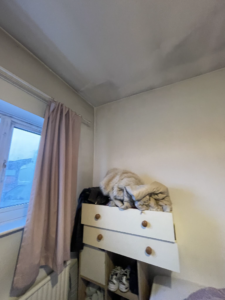
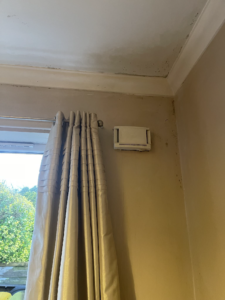
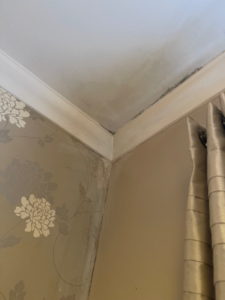
Mould growth had developed around ceiling and wall junctions, external corners and window reveals. Moisture was also regularly forming on glazing during colder weather. The homeowner was concerned that the property may be suffering from rising damp, penetrating damp or a possible roof leak.
Having received conflicting opinions, they wanted an independent investigation to establish the actual cause before spending money on unnecessary remedial works.
A non-invasive investigation was undertaken to assess both the building and the internal environmental conditions.
The investigation included:
Each affected area was assessed individually before considering how the property was performing as a whole.
The inspection found no evidence of active penetrating damp or rising damp affecting the areas where mould growth had developed.
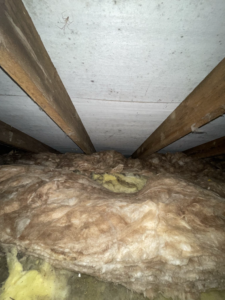
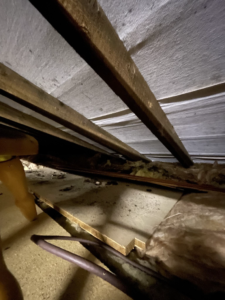
The roof timbers also showed no evidence of active water penetration or an ongoing roof leak.
Instead, condensation was observed on the underside of the roofing membrane within the loft space. Moisture droplets had formed across the membrane, indicating that warm, moisture-laden air from the property was reaching the colder roof void and condensing.
Internally, mould growth was concentrated in areas including:
These locations corresponded with colder surfaces and areas of reduced air movement.
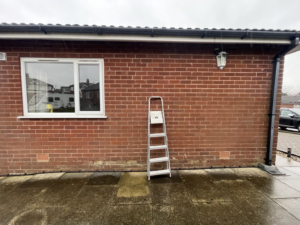
The investigation also identified conditions capable of increasing condensation, including elevated internal humidity, limited background ventilation and restricted airflow around some external walls and windows.
The overall pattern of mould growth was consistent with condensation rather than water penetration through the building fabric.
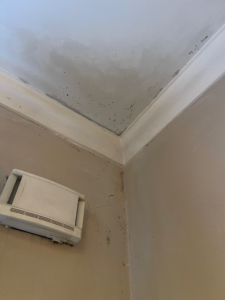
The investigation concluded that the mould and moisture problems were consistent with condensation caused by elevated internal humidity, inadequate ventilation and colder internal surfaces, rather than a structural damp defect.
Contributing factors included:
Together, these conditions allowed moisture-laden air to condense on colder surfaces, contributing to mould growth within the living areas and condensation within the roof space.
Rather than recommending unnecessary damp-proofing or other invasive treatments, practical measures were advised to improve moisture management within the property.
These included:
No chemical damp-proof course or specialist damp treatment was recommended because there was no evidence that such work was required.
The investigation provided the homeowner with a clearer understanding of the cause of the condensation and mould.
The findings indicated that the property was not suffering from an active roof leak, rising damp or penetrating damp in the areas investigated.
By identifying condensation as the underlying mechanism, the homeowner could concentrate on improving ventilation, humidity control and airflow rather than spending money on inappropriate damp-proofing or other unnecessary remedial works.
The investigation demonstrated the importance of establishing the cause of moisture-related defects before deciding on remedial work.
Ceiling staining and mould growth can easily be mistaken for evidence of a leaking roof or other forms of damp.
In this case, inspection of the roof space and affected areas identified condensation rather than active water penetration as the likely cause.
At Property-Fixx Ltd, the aim is to identify the cause of the moisture problem, rather than simply treating the visible symptoms.
